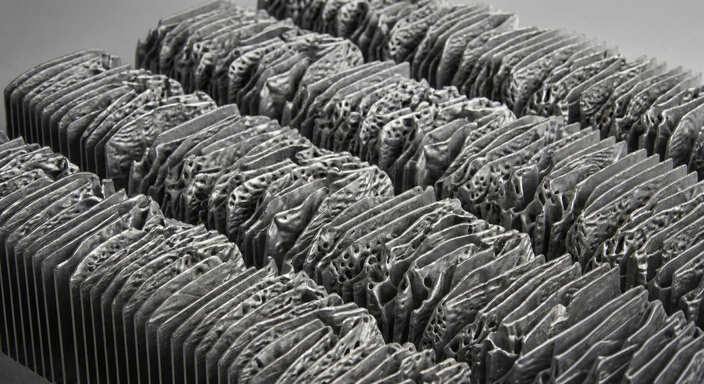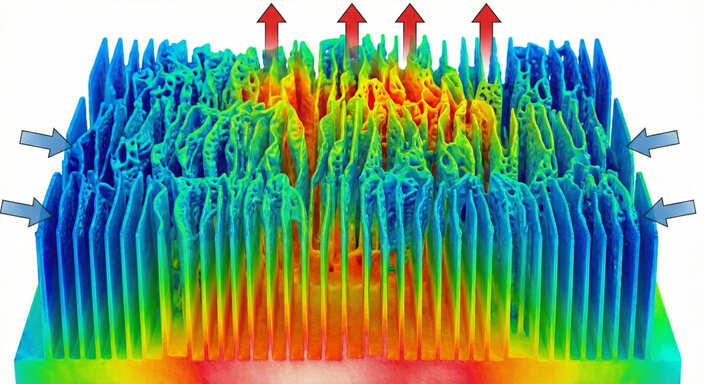

Heatsink performance comes from optimized fin design and airflow, not size or weight.
Efficient Heat Control
Efficient Thermal Management Solution
A heatsink dissipates heat to maintain stable temperatures in PCBs and other systems.
It prevents overheating-related failures while improving reliability, lifespan, and system efficiency.
How Heat Moves
Heat Transfer Stages
Cooling is not simply about blowing cold air. What matters is
where heat is generated, how it moves, and where it accumulates.
Many cooling designs overlook this flow, reducing efficiency and temperature uniformity.
Rapid Heat Transfer
Rapidly transfers generated heat
to suppress temperature rise.
Optimized materials and heat transfer–focused structural design prevent localized heat buildup and enable rapid heat dissipation.
Efficient Heat Dissipation
Efficiently dissipates transferred heat into the surrounding air.
With fin structures designed to account for convection, heat is naturally released to the outside.
Designed for Stability
Structural Design Considering Stability

Fin Structure
Fin geometry and spacing are optimized to enable fast
heat transfer and effective dissipation

Surface Area
Heat dissipation efficiency is increased
maximizing the surface area in contact air.

Airflow Direction
Airflow-oriented design prevents heat stagnation
supports smooth exhaust of heat to the outside.
Efficient
Heat Control
Optimized Thermal Control Solution
Rapidly disperses heat to prevent overheating and performance loss. This improves component reliability, extends equipment lifespan, and enhances overall system efficiency.