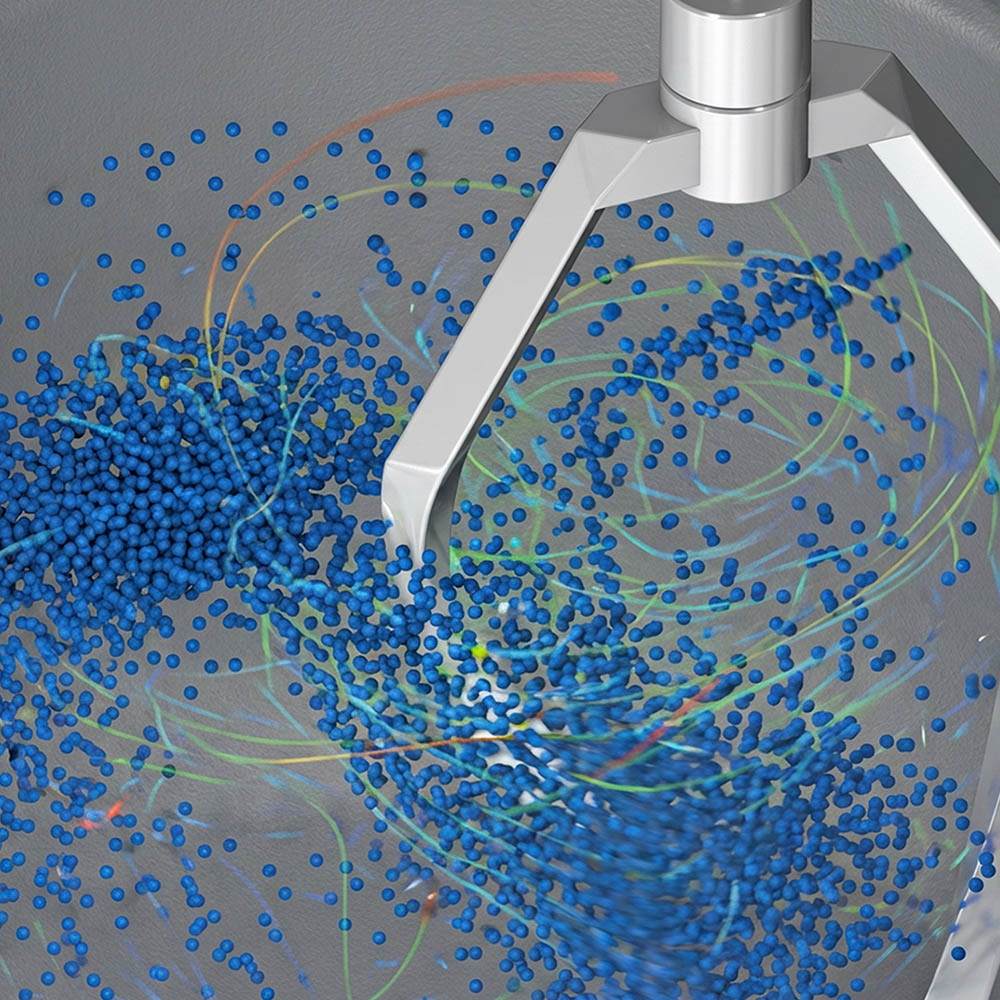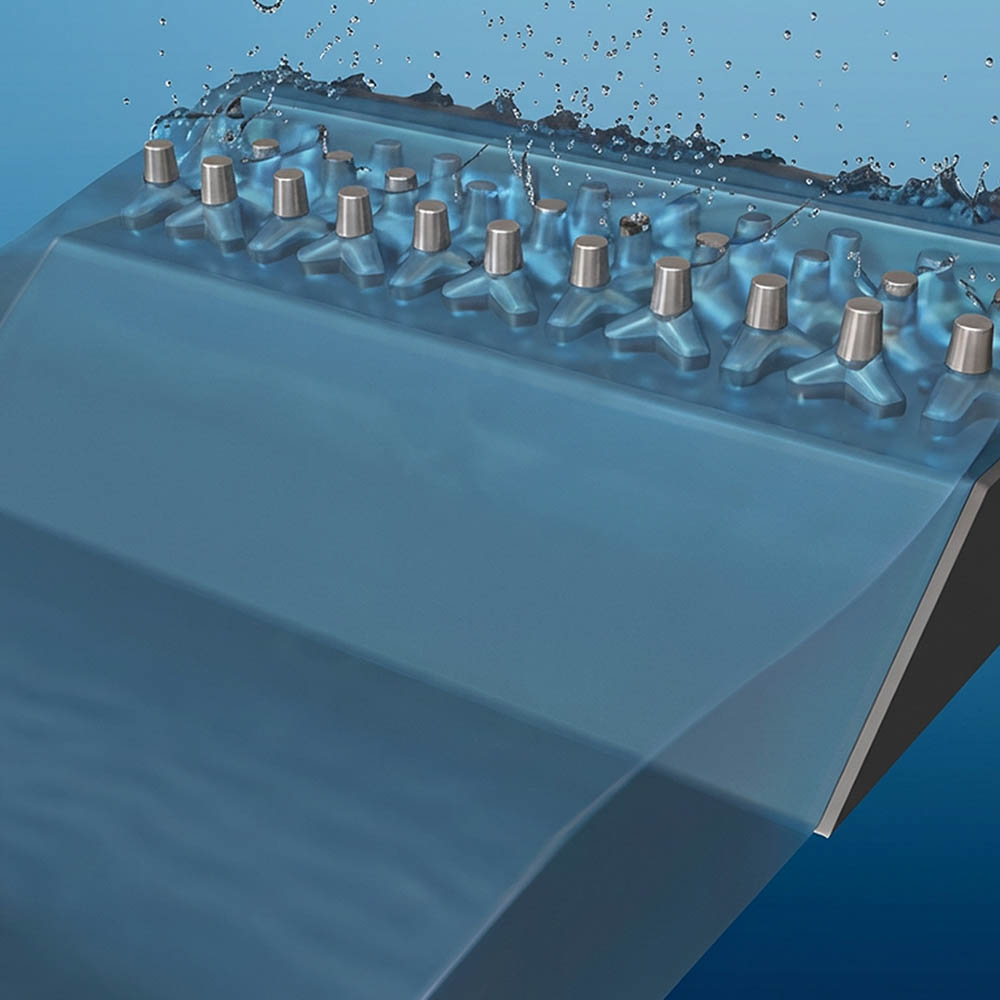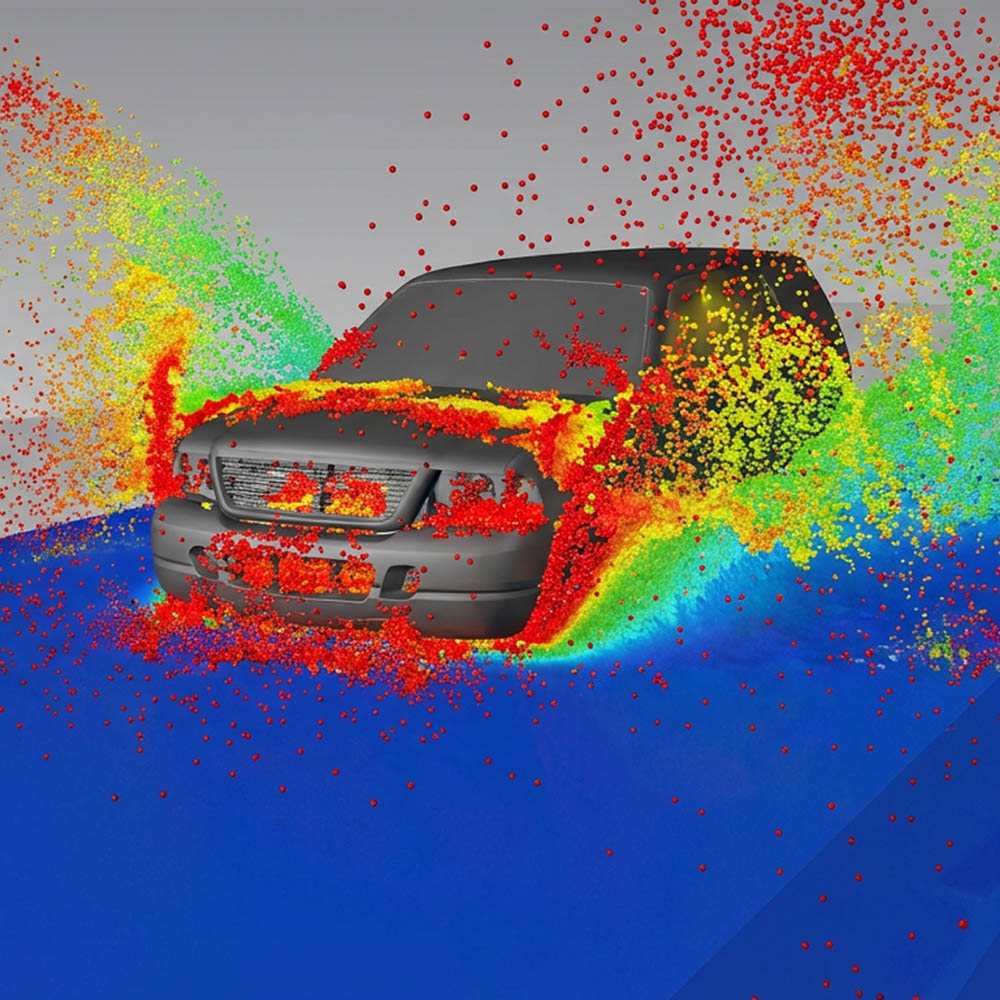
Even Paste Mixing
ParticleWorks delivers precise fluid behavior analysis using a meshless, particle-based approach.
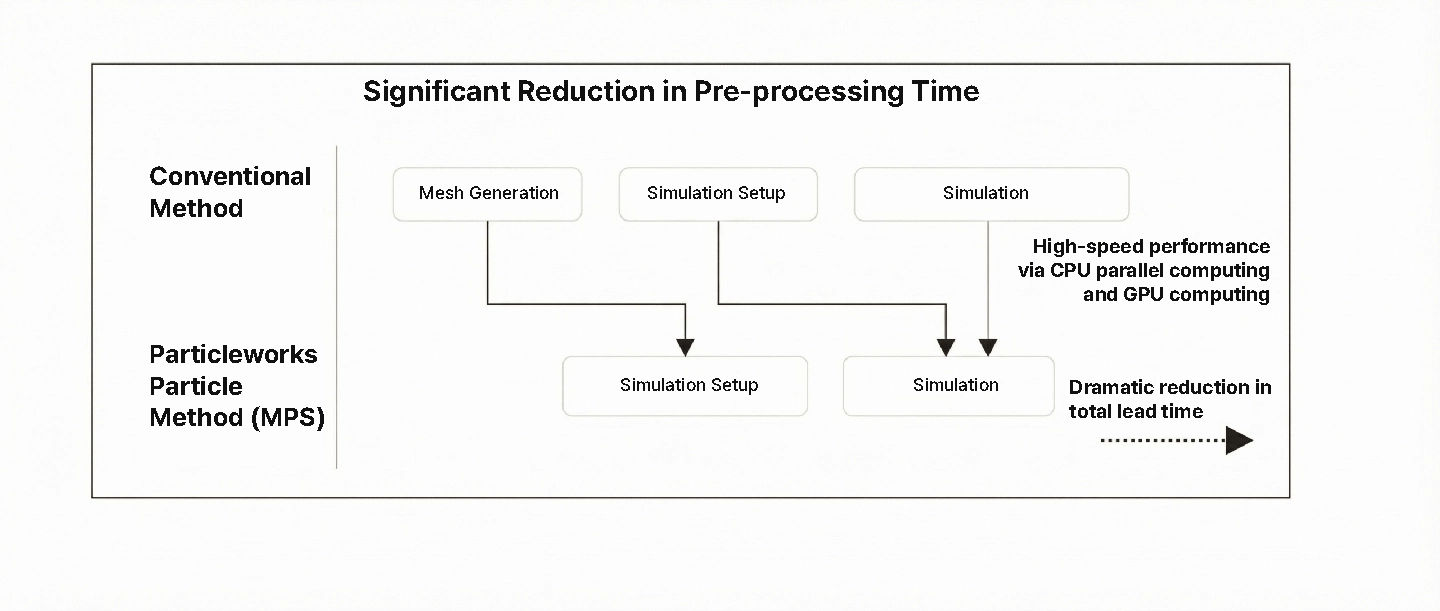
By eliminating the need for mesh generation, it enables the rapid analysis of complex phenomena—including free surfaces and moving boundary problems—directly from CAD geometry. This streamlined process drastically reduces simulation lead times.
Mesh-Free Fluid Simulation
Advantages of Mesh – Free Fluid Analysis
Conventional Method (Mesh-based / Grid-based)
- Domain-wide Mesh Generation: Requires mesh generation for the entire analysis domain.
- Restricted Calculation: Calculations are performed only within the defined mesh regions.
- Mesh Dependency: Free surface accuracy depends on mesh size; droplets smaller than the mesh cannot be captured.
Particle Method (Mesh-free / Particle-based)
- Direct Fluid Modeling: Models the fluid itself as particles without the need for a mesh.
- Property-based Simulation: Fluid properties are assigned to individual particles, which are generated specifically for the fluid volume (e.g., water column).
- High-Fidelity Resolution: Captures subtle free surface variations and enables the calculation of droplets splashing outside the tank.
Fluid Meets Motion
Integrated Mechanical & Fluid Interaction
ParticleWorks brings real-world mechanical-fluid interactions to life through its powerful co-simulation with RecurDyn.
By calculating mechanical behavior and fluid pressure simultaneously, it offers a versatile simulation environment that easily links with diverse CFD data and external resources.
Co-simulation
- Complex modeling of ships, offshore wind turbines, etc.
- Graph/Vector visualization
- Load noise filtering (removal)
- Mechanism motion analysis driven by fluid loads
defined by displacement or velocity.
- Joint displacement, velocity, and acceleration
- Relative motion and contact definitions between bodies
- Application of diverse loads to bodies
- Controller (Control system) analysis
- Quasi-flexible modeling via discretization of rigid bodies
- Modeling of fluid-force-affected components as flexible bodies
Support for CSV-Based Particle Data Analysis
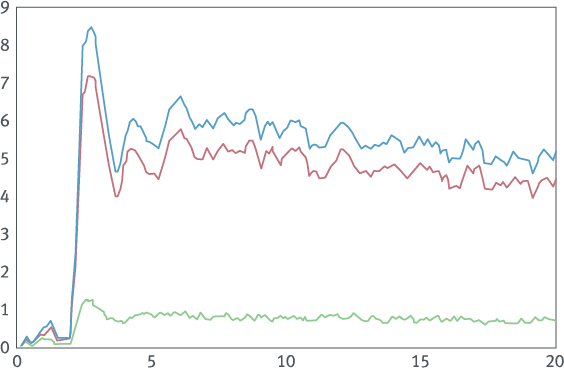
Anylysis Image
Visualize Motion and Response at a Glance